Greenland Between Autonomy And Global Attention

In recent years, Greenland has shifted from being a largely marginal—even though vast—territory of the Kingdom of Denmark to one of the most closely watched focal points of Arctic and international politics. For decades, it had remained on the periphery of global debate, known more for its symbolic role in the climate question than for its political weight. Today, however, the island stands at the center of a network of interests that unites—and sometimes opposes—Copenhagen, Brussels, Washington, Moscow and Beijing, while also looking inwards with an increasingly distinct identity.
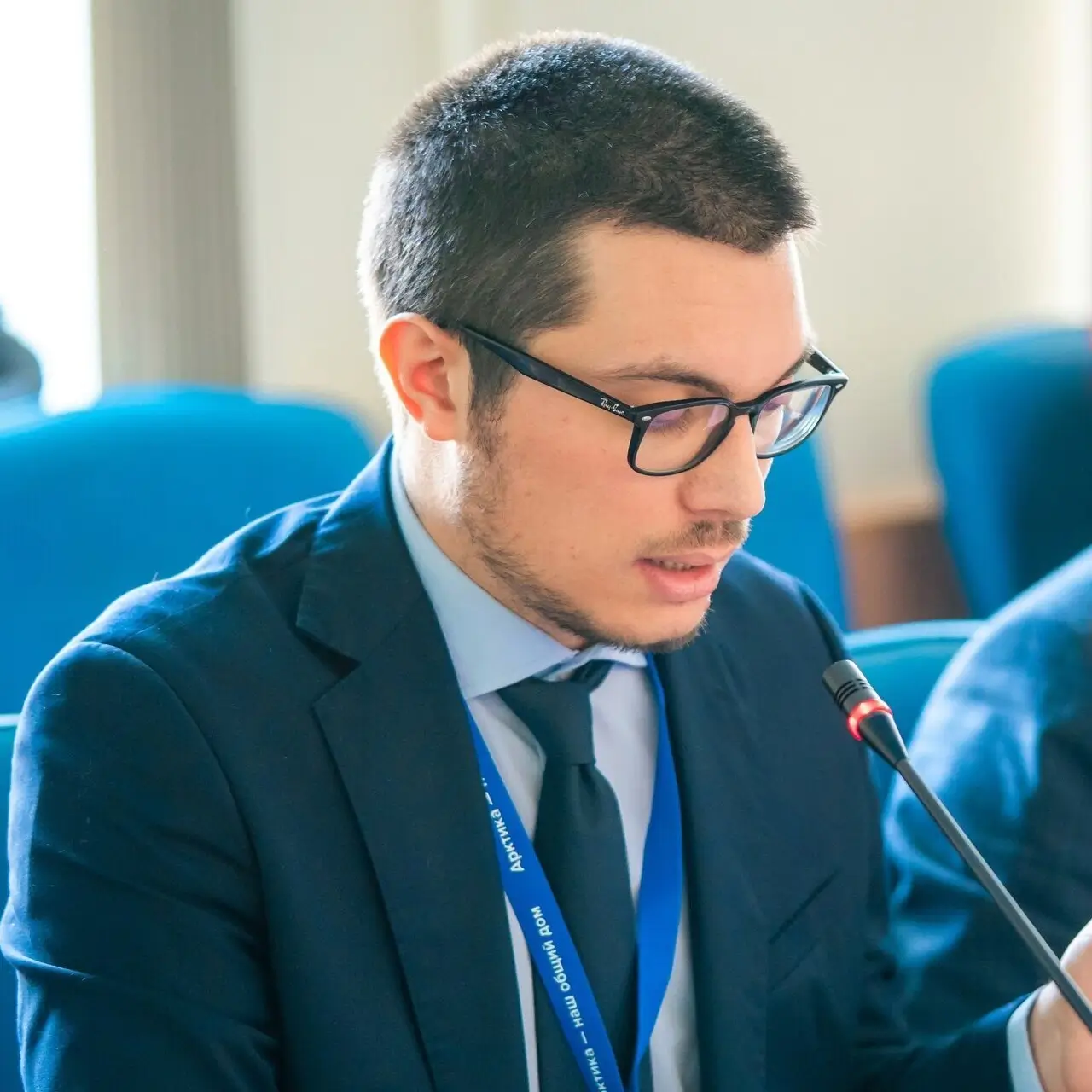
At the Arctic Circle Assembly 2025, the Greenlandic representatives adopted a realistic tone. They are aware of the renewed global attention but determined to manage it on their own terms. Greenland, they noted, does not view this attention with unease, but rather as something normal and even positive. “We are used to geopolitical shifts,” one delegate from Nuuk said, stressing how the island’s population has learned to live with changes imposed from outside. “We are not afraid of them; we observe, assess and adapt.”
These words capture the political spirit of a territory that, while still formally part of the Kingdom of Denmark, moves with growing autonomy. Greenland has its own parliament and a government responsible for nearly all domestic affairs, from natural resource management to environmental policy. Only defense and foreign policy remain under Danish control, even though in these areas Nuuk, too, seeks space for maneuver. Its participation in major Arctic forums—such as the Arctic Circle Assembly in Reykjavík and Arctic Frontiers in Tromsø, to mention a few—shows how the Greenlandic voice is more and more independent from that of Denmark. Within the Arctic Council too, where Greenland takes part in working groups, a more autonomous line is emerging.
The emphasis on autonomy is not only an identity statement. It is a way of proclaiming that Greenland does not wish to be the object of other nations’ politics but an actor capable of shaping them. This attitude is reflected in the language of its representatives, who rarely speak in terms of “threat” or “competition,” but rather of adaptation and resilience. In an Arctic context increasingly influenced by global tensions, Nuuk promotes a vision of balance, fully aware of being observed by all but confident in its ability to choose how to respond.
The 2019 episode, when the Trump administration proposed to buy Greenland, remains a symbolic turning point: at the time, the island was still perceived as an object of interest rather than a political actor in its own right. Six years later, that perception has been reversed. In 2025, Donald Trump reiterated that the United States “must have Greenland” and did not rule out a possible military option, reigniting debate over the island’s sovereignty and growing strategic importance in the North Atlantic.
Today, Greenland is not only an autonomous territory but a political laboratory reflecting the contradictions of the new Arctic order. It is at the same time dependent and independent, part of a European kingdom and a bridge to North America, a site of climatic vulnerability and economic ambition. Its strength lies in this ambiguity: the ability to remain at the center of the Arctic world without fully taking sides, defending its own specificity in a moment when every actor is seeking to expand its space and influence.
Between Copenhagen And Nuuk
The relationship between Greenland and Denmark is one of the most delicate elements of Arctic politics. While Copenhagen continues to interpret the region through the lens of security and Euro-Atlantic alignment, Nuuk increasingly focuses on domestic development, economic sustainability and its international projection as an autonomous actor.
During the Arctic Circle Assembly 2025, Greenlandic representatives emphasized a clear message: the relationship with Denmark is solid, but it must evolve into a partnership of equals. Greenland does not want to break up with the Kingdom, but rather for the boundaries of its sovereignty to be redefined. The debates on the island’s future constitutional status, often resurfacing in recent years, reflect this tension between formal dependency and the aspiration to functional independence.
Copenhagen, for its part, attempts to balance prudence and openness. On one hand, it recognizes that the autonomy process is now irreversible; on the other, it fears that full separation could weaken Denmark’s overall weight in Arctic governance. For this reason, the Danish government intends on keeping Greenland integrated within international forums, supporting its participation but always under the institutional umbrella of the Kingdom.
Differences are most evident in matters of defense and natural resources. The management of military bases, such as Pituffik Space Base, remains a Danish and allied responsibility, yet Nuuk increasingly demands to be consulted on every decision affecting its territory. Similarly, policies on mining and the exploitation of rare earths reveal different priorities: while Denmark tends to favor cooperation with European partners, Greenland assesses more freely the opportunities offered by external actors, including the United States and Asia.
This approach by Nuuk proves a growing political maturity, in which Greenland no longer defines itself through its relationship with Denmark, but through its own capacity for action. As highlighted in Reykjavík, the island is not seeking separation, but rather a new balance, less subordinate and more consistent with its role as a bridge between Europe and North America.
The United States And The North Atlantic Balance
The relationship with the United States has become one of the most sensitive dimensions of Greenland’s foreign policy. For Washington, the island is both a strategic observation point and a testing ground for its renewed focus on the Arctic. The Pituffik Space Base—until recently known as Thule Air Base—is an essential node in the North American defense system, integrating radar surveillance, satellite tracking and missile-warning functions.
In recent years, however, the American presence has extended beyond the military sphere. The opening of the US Consulate in Nuuk, accompanied by a series of high-level visits, marked the official return of US diplomacy to the island and the start of deeper cooperation in sectors such as energy, digital connectivity and scientific research. Greenlandic delegates have interpreted this renewed interest not as a threat but as recognition of their growing political stature. From their perspective, Washington’s attention confirms that Greenland is now regarded as a legitimate and stable interlocutor, able to contribute to regional dynamics from an autonomous position.
At the same time, this growing role has sparked domestic debate. Some observers fear that the expansion of economic and infrastructural ties with the United States could lead to a new form of strategic dependency. Others argue that maintaining a direct dialogue with Washington is a guarantee of stability and development. The Greenlandic government aims to maintain balance: to welcome cooperation but on equal terms, ensuring that it does not limit the island’s decision-making autonomy.
Overall, a more self-aware Greenland is emerging. The United States sees the island as a necessary partner; Nuuk, for its part, does not reject this role but uses it to consolidate its position as a natural bridge between Europe and North America. In an Arctic shaped by new rivalries and alliances, this ability to balance external interests is maybe the most evident form of sovereignty that Greenland can exercise today.

Northern lights above Nuuk
Resources And Greenland’s Economic Future
Greenland’s mineral wealth has long been at the center of political and international debate. The island holds one of the world’s highest concentrations of rare earth elements outside Asia, along with deposits of uranium, zinc, copper and other critical minerals essential to the energy transition. In a global context defined by competition over supply chains, these resources represent both an opportunity and a potential source of tension.
In recent years, the government in Nuuk has worked to balance economic ambitions with environmental protection, suspending or scaling down several high-impact mining projects. The best-known case is the Kvanefjeld mine in southern Greenland, where an Australia-China consortium had planned to extract rare earths and uranium. After years of public opposition and political controversy, the project was halted in 2021, marking a turning point in the island’s mining policy.
Since then, Greenland has followed a selective approach—open to investment but determined to retain national control over strategic resources. Cooperation with the European Union, formalized through a Memorandum of Understanding between the EU and the Government of Greenland, has strengthened accordingly: Brussels now funds feasibility studies and supporting infrastructure to build sustainable value chains for critical raw materials. At the same time, the United States has launched joint exploration initiatives and provided technical assistance to reduce Western dependence on the Chinese market.
In this situation, Greenland must balance autonomy and openness. Local communities demand that economic benefits stay within the island and that projects meet environmental standards, while foreign investors push for faster approvals. The government proceeds carefully, aware that resource management will test its ability to exercise genuine sovereignty.
At Reykjavík, Greenlandic delegates reiterated that economic development cannot be separated from self-determination. The island’s mineral wealth is not viewed as a shortcut to independence, but as a tool for building a stable and self-reliant economy.
Europe, Russia And The Wider Arctic Context
Finally, Greenland’s position cannot be fully understood without considering the broader post-2022 Arctic framework, where European interests and Russian influence overlap. The island stands at a point of balance between these two forces: on one side, the economic and regulatory drive of the European Union; on the other, the presence of Russia, which continues to shape the dynamics of the North.
For the European Union, Greenland has become a key partner in securing access to critical raw materials and in promoting scientific and environmental cooperation. Brussels no longer treats the island as a mere Danish dependency but as an autonomous political counterpart. Still, Europe’s Arctic vision remains fragmented: some member states prioritize security, others the climate or economic dimension. Nuuk moves among these overlapping agendas, cooperating where possible while defending its freedom of action.
The Russian dimension, even if indirect, is impossible to ignore. Formal relations between Nuuk and Moscow are minimal but the influence of the Arctic giant remains constant. The expansion of energy infrastructure, the growing expansion of the operation on the Northern Sea Route, and the deepening of Russia’s partnership with China are reshaping the political geography of the North. For Greenland, these developments are not seen as an immediate threat but as structural facts to be monitored carefully. Like many Northern countries, Nuuk recognizes that no credible Arctic governance can exclude Russia’s presence, whatever the political circumstances.
Greenland’s stability depends on its ability to keep communication channels open with all sides—Europe, North America and, where possible, Russia as well. The challenge is not to take sides, but to remain relevant.
Greenland in 2025 is no longer a periphery of the Arctic, but one of its centers of gravity. The island moves within a complex space where the strategies of global Powers and regional interests converge but it maintains its own line, patient, aware of its limits but also of its uniqueness.
Its strength lies in balance. Nuuk does not aim to compete with anyone, but to remain necessary to all. It cooperates with Washington without dependence, engages with Brussels without being absorbed and observes Moscow without imitation. It is an unstable but productive equilibrium, the ability to stay at the table with everyone without becoming anyone’s pawn.