
The Battle for Uranium on the Kalix River

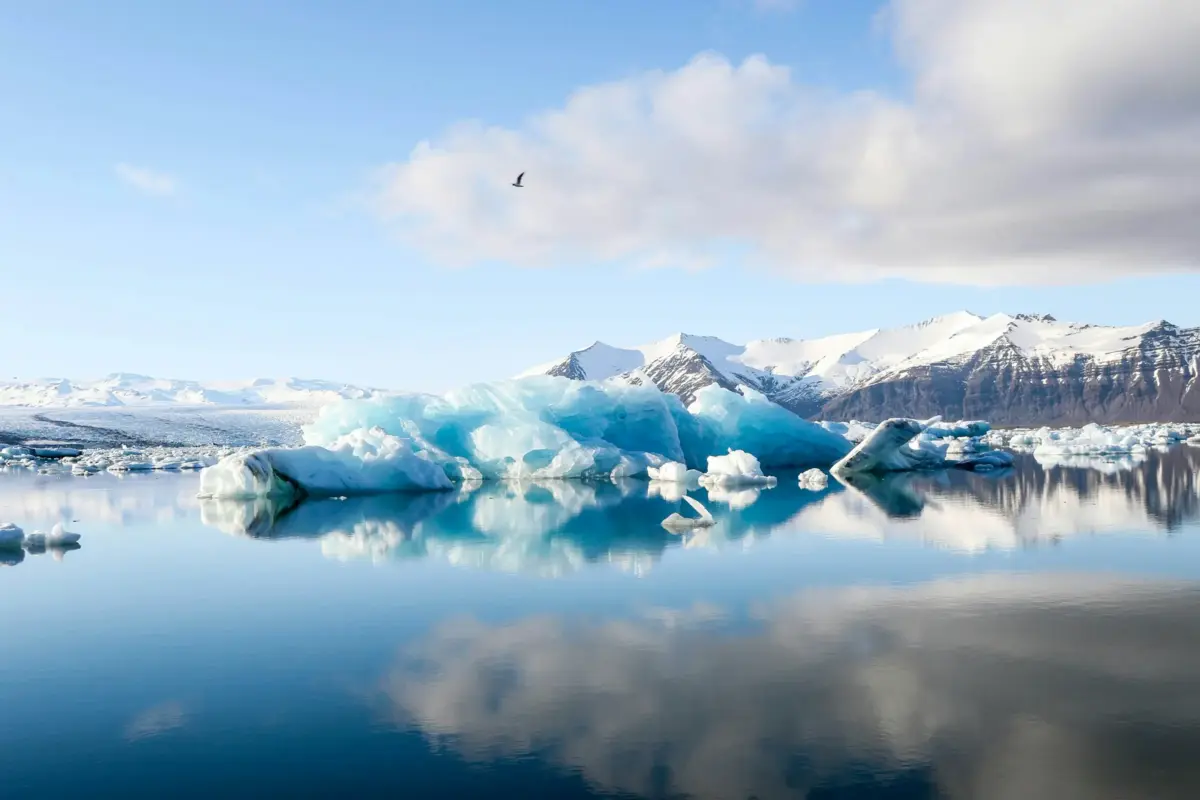
The Kalix River basin, in the Swedish Arctic, is known not only as a protected nature area but also as the site of a never-to-be-fought battle between the entire Swedish army and the “Red Hordes” from the East, who never showed up on the battlefield despite being eagerly awaited.
Until the early 1990s, Sweden buried a significant portion of its national treasure in the area adjacent to the river to the west, in the form of military fortifications. Most Swedes over 55 still recall their military service on the frigid Arctic soil with a shudder and nostalgia.
BACKGROUND
Today, the Kalix River, with the fortifications of that expensive defensive line preserved as open-air museums, is becoming the site of a real battle between sensible citizens who love their country and corrupt politicians who have given permission to an American company of dubious origin to first conduct exploration and then, possibly, begin mining uranium ore in the lower reaches of the river.
The 2012 disaster in neighboring Finland at a waste disposal site for nickel production, which yields uranium as a by-product, just 300 kilometers from the planned uranium mining site in Sweden, could have served as a warning to the country’s authorities. But apparently it didn’t. To do that, you’d need a memory slightly longer than a sparrow’s nose.
In 2012, a massive wastewater leak at the Talvivaara mine in Sotkamo, northern Finland, became one of the country’s worst modern environmental accidents. A gypsum pond at the nickel mine ruptured, and metal-laden wastewater escaped into the surrounding environment. The consequences of this monstrous crime against northern nature are still being felt.
The plan to reinvigorate the country’s nuclear energy industry by building small modular reactors and small lead-cooled reactors also fails to explain the Swedish authorities’ push to mine uranium ore on their own territory. Both types of reactor require a different kind of nuclear fuel and a different degree of enrichment.
Sweden plans to begin building new nuclear power plants in the late 2020s, with the first new reactors expected to be in place in the first half to mid-2030s. Vattenfall is planning small modular reactors at Ringhals. The company Blykalla has submitted applications to build smaller lead-cooled reactors in both Norrsundet (Gävle) and at Untra in the municipality of Tierp.
The first case requires a different type of nuclear fuel: small modular reactors most often run on uranium-235 enriched to 19.75%, known as high-assay low-enriched uranium (HALEU). Conventional large nuclear power plants use fuel enriched to only 3–5%.
Small and medium-sized reactors with lead or lead-bismuth coolants typically use mixed nitride uranium-plutonium fuel (MNUP).
Regardless of the Swedish authorities’ real intentions regarding domestic uranium mining, we wish the opponents of this project, which is dangerous for the Arctic and the Baltic Sea, success in their fight against it.
In any case, grassroots democracy in Sweden has already fallen victim to the decisions of a corrupt parliament and a shady American company, as is clear from the Swedish press reports cited below. In 2029, the value of organized resistance from local residents and environmental organizations should become clear. The forces are clearly not equal, and it looks like Sweden may fail the democracy test.
It’s already safe to say that the cost of uranium ore production in Sweden will be much higher than that of the world’s uranium mining giants: Kazakhstan, Canada, Namibia, and Australia, which together account for roughly 83% of global production. The uranium market is part of the global economy, and countries with nuclear energy can readily acquire uranium ore, subject to price competition.
Sweden has no chance of becoming a major uranium ore producer, and no one in this market is expecting a newcomer the size of a flea that, moreover, lacks its own uranium enrichment facilities. Furthermore, flea-derived uranium will be very expensive given the cost of exploration and development of deposits, should any be discovered.
This suggests that the Swedes’ daring venture in the Arctic is purely political and possibly military-economic in nature, as the project will inevitably be unsustainable and stillborn from an economic perspective.
With Trump’s US ceasing to be a reliable ally for Europe, including in terms of nuclear deterrence, the Swedish uranium project could be part of a vast and secret effort to militarily nuclearize Europe—something even the French nuclear umbrella, stretched to the breaking point, would be unable to cover.
In this case, the actions of the Swedish authorities become clear: secret agreements must be observed, and a military-oriented raw material base must be secured, from which raw materials are sent to other European countries for enrichment to weapons grade, followed by the manufacture of nuclear weapons. In that case, the cost of Swedish uranium is irrelevant. Nor is Swedish democracy at the level of individual municipalities.
Background
Bergsstaten, the Swedish Mining Inspectorate, has granted Adelheid Holdings LLC, a company with no publicly available official website, two exploration permits in Kalix municipality: Pålänge No. 3 (decision June 23, 2026) and Kamlunge Väst No. 1 (decision June 25, 2026). Together, the permits cover approximately 1,650 hectares and are valid until 2029. The company wants to investigate the presence of uranium, yttrium, copper, nickel, and cobalt, including by drilling.
The permits are possible at all because on November 5, 2025, the Riksdag lifted the ban on uranium mining that had been in effect since 2018, with the repeal taking effect on January 1, 2026. On June 15, 2026, the Riksdag also decided to abolish the municipal veto for uranium mining, effective July 15, 2026. An individual municipality can therefore no longer stop a uranium mine through its own veto.
The area lies in the catchment area of the Kalix River, which is a national river and partly classified as Natura 2000. The Sami Parliament, Kalix municipality, and several affected property owners have objected to the applications, citing, among other things, reindeer husbandry, drinking water, and natural values. Under the Minerals Act, such conflicting interests are only fully examined when a mining concession is sought—not when an early exploration permit is granted.
Swedish Import Dependency
Six nuclear reactors are in operation in Sweden, divided between three nuclear power plants: Forsmark, Oskarshamn, and Ringhals. Sweden also hosts a number of other nuclear facilities for the production of nuclear fuel and the storage of spent nuclear fuel and radioactive waste.
The Swedish nuclear power plants use approximately 1,500 metric tons of natural uranium annually, purchased from the world market.
The imported uranium originally comes from Canada, Australia, Namibia, and Kazakhstan. It must be enriched before it can be used as nuclear fuel, and enrichment services are purchased mainly from France, the United Kingdom, and the Netherlands.
Research and development are underway on a future type of nuclear reactor, “generation 4,” which could use fuel up to 100 times more efficiently. These could also potentially run on thorium.
Swedish Uranium Deposits
Swedish uranium deposits are found in alum shale and in the bedrock.
In Sweden, it is mainly certain granites and pegmatites that have elevated uranium content, though high levels can also be found in other types of rock. Uranium-rich alum shale occurs in Skåne, Västergötland, Östergötland, Öland, Närke, and along the Swedish mountain range. This alum shale has uranium contents of 50–400 grams per metric ton, compared with normal contents in uranium-rich granites of 15–40 grams per metric ton.
The dark alum shales are the youngest deposits and also those containing the largest total amounts of uranium in Sweden. They occur in greater quantities in the peripheral areas of the mountain range, Skåne, Billingen in Västergötland, Östergötland, Närke, and on Öland. The alum shales formed on the seabed during the Cambrian period, about 500 million years ago.
In addition to uranium, the alum shales also contain organic material and metals such as vanadium, molybdenum, and nickel. The uranium content varies between areas, but also between layers in the shale at each location. The most uranium-rich alum shales are those found in parts of Billingen, which are 3.5 meters thick and have a uranium content of around 300 grams per metric ton.
The oldest uranium deposits in the primordial rock are more than 1.9 billion years old. Many of them are located in the northern parts of Sweden. In these deposits the uranium content is higher than in the alum shales, often around 1,000 grams per metric ton, but their size is more limited.
Uranium in Water—Long-Term Impact
Uranium is chemically a heavy metal. At the concentrations that often occur in aquatic environments, its kidney-damaging chemical toxicity is a greater threat to aquatic organisms than its radioactivity. Research shows that uranium can accumulate in the kidneys, liver, and skeleton of fish, affect the growth of bottom-dwelling insect larvae, and change the species composition in watercourses. Sensitive species such as dragonflies and damselflies are displaced by more resistant midge larvae.
Once uranium has entered the aquatic environment, it does not disappear. Some is diluted downstream, but much is bound to particles and stored in bottom sediment. The sediment becomes a growing layer that can release uranium during high flows, dredging, or changes in pH. This means emissions can have effects long after the original activity has ceased.
The Kalix River Is Already Burdened by Uranium
Measurements from the Torne and Kalix River Water Conservation Association show that uranium levels in several of the Kalix River’s tributaries already exceed the Swedish limit value of 0.17 µg/l, with existing ore and iron ore mining alone:
- Luossajoki (LKAB Kiruna): 18.17 µg/l—approximately 107 times the limit value
- Lina River, downstream of LKAB Malmberget: 2.47 µg/l—approximately 14 times the limit value
- Leipojoki, downstream of Boliden Aitik’s clarifier: 0.55 µg/l—approximately 3 times the limit value
- Kalix River, directly downstream of Rakkurijoki: 0.18 µg/l—already in the main channel
The Water Conservation Association assesses that uranium levels do not reach good status in the watercourses located in the industrial areas of the mines, and that the pollution is linked to the mining, not to the natural background.
At Kamlunge and Kalix, the Kalix River today reaches good status for uranium. This is probably due to the distance from the mining operations and dilution over just over 30 kilometers, not because uranium is harmless. A new uranium operation in the middle of this lower, relatively healthy part of the river would lack that protection and risk shifting the pollution problem to the lower reaches of the national river.
Experiences from Uranium Mining in Other Countries
International examples show that uranium mining often involves recurring leakage and very long-term cleanup needs, even in countries with extensive environmental legislation.
Talvivaara/Terrafame, Sotkamo, Finland
A nickel and cobalt mine where uranium is extracted as a by-product, about 300 kilometers east of Kalix. In November 2012, a gypsum dam burst and around 1.2 million cubic meters of metal- and uranium-bearing process water leaked out, of which at least 240,000 cubic meters reached surrounding lakes and watercourses. The incident has been described as a serious environmental crime. Uranium levels of up to 600 µg/l were measured in a pond near the mine—six times the limit value for drinking water. The company later went bankrupt and the operations were taken over by the Finnish state.
Church Rock, US (1979)
A dam at a uranium mine burst, releasing approximately 94 million liters of radioactive and acidic process water and 1,100 tons of uranium sludge into the Puerco River. In terms of radioactivity, the release was larger than the Three Mile Island accident that same year. Groundwater in the area is still not under control more than four decades later.
Wreaking Havoc Freely
An American mining company has received an exploration permit to look for uranium and other rare earth metals near the Kalix River. This has aroused anger among residents, writes TV4 Nyheterna.
Many see it as a first step toward mining and do not think the local community is allowed to be sufficiently involved in the process.
“We feel that the new mineral legislation means everything has been let loose and it will be like a Klondike—everyone will come here and mine and wreak havoc freely,” says local businessman Einar Knudsen.
Minister for Energy, Business and Industry Ebba Busch says she takes the concerns of the residents of Kalix very seriously and that no one will receive a mining permit without meeting high environmental requirements.
A Permit for a Shady American Company
Adelheid Holdings wants to prospect for uranium near Pålänge and Kamlunge in Kalix after the ban on uranium mining and the municipal veto were lifted in Sweden.
Environmentalists such as Sven Nordlund and Siw Ahlfort are leading the opposition and warning of risks to groundwater and the Kalix River already during test drilling.
Bergsstaten said yes to Adelheid Holdings LLC’s application to begin exploration for uranium in Pålänge and Kamlunge in Kalix municipality. The decision means the company can search across a broad area; if it wants to proceed, a new application is needed for the specific area.
Susanne Andersson, municipal councilor, says the decision from Bergsstaten is worrying. She is disappointed given that Kalix municipality had described the situation, including the proximity to the national river, several national interest areas, and Natura 2000.
“It is regrettable that the Riksdag first lifted the ban on uranium mining and then abolished the municipal veto so that the municipalities cannot influence it in that way,” she says.
Kalix municipality will invite representatives from Bergsstaten to a meeting on the matter this autumn.
The Process Should Be Stopped Right Now
The parties that agree to say no to uranium mining in the affected areas will also act nationally, including through a joint debate article on the issue.
“If the company is granted permission to proceed with the exploration plans, that is, if Bergsstaten says yes to their plans in the next step, only then can the municipality appeal the decision,” says Susanne Andersson.
Sven Nordlund says the entire process should be stopped at the first stage.
“I know that landowners and others are mobilizing against continued investigations,” he says.
For the Kamlunge area, the Kalix concession Sami village has also pointed out that the area is of national interest for the reindeer industry, and that affected Sami villages should have the right and the opportunity to influence decisions when land in the area is affected.
Many who own properties or are otherwise affected in their immediate area are against the exploration. They are worried that water quality could be negatively affected. There is also concern that tourism, fishing, hunting, and other outdoor activities could be damaged or disappear if the permit is granted.
For the Pålänge area, property owners affected by the application have pointed out that there are ancient remains in the area; another property owner opposes encroachment on his property, and another opposes the establishment of a mine along the Kalix River.
According to Bergsstaten’s decision, different interests are not to be weighed against each other when considering whether to grant an exploration permit.
Green Party–Led Protest
Sven Nordlund, group leader for the Green Party in Kalix, and Siw Ahlfort, regional candidate for the Green Party in Norrbotten, are protesting against the company’s plans.
They do not want to see further investigations, such as test drilling, because that alone poses a threat to the environment.
“We are trying to gather those who think like us; if we get massive resistance it will be difficult for the company to push through its plans,” says Sven Nordlund.
“There are suspicions that our groundwater source has water veins that come from Kamlunge. If the Kalix River, our national river, is contaminated from the test drilling or uranium mining, we are talking about damage that will remain for thousands of years.”
A microscopic suspicion that this could happen means the plans cannot become reality, Nordlund says.
Siw Ahlfort says a test drilling a couple of kilometers down into the bedrock involves risks, and that even very small concentrations of certain elements and various minerals are harmful in low doses.
“The big risk is when the substances reach the water and affect animals, nature, and people,” she says.
Behind the changed legislation is the view that Sweden should mine its own uranium. Uranium is mined primarily for use as nuclear fuel in nuclear power plants for electricity production.
Ahlfort says new mines are the absolute last step, when other options are lacking. Nordlund says there are mines already operating in Canada with large amounts of uranium.
“It is about the government wanting to build nuclear power at all costs,” says Sven Nordlund.
Would a mine in the Kalix area provide a lot of new jobs?
“We don’t have a huge shortage of jobs here; we rather have a shortage of labor. That can also lead to concerns,” says Sven Nordlund.
Sources:
- SGU (in Swedish)
- NSD (in Swedish)
- NSD (in Swedish)
- Miljöpartiet Norrbotten (in Swedish)
- Omni (in Swedish)