
Why There's No Northernmost City

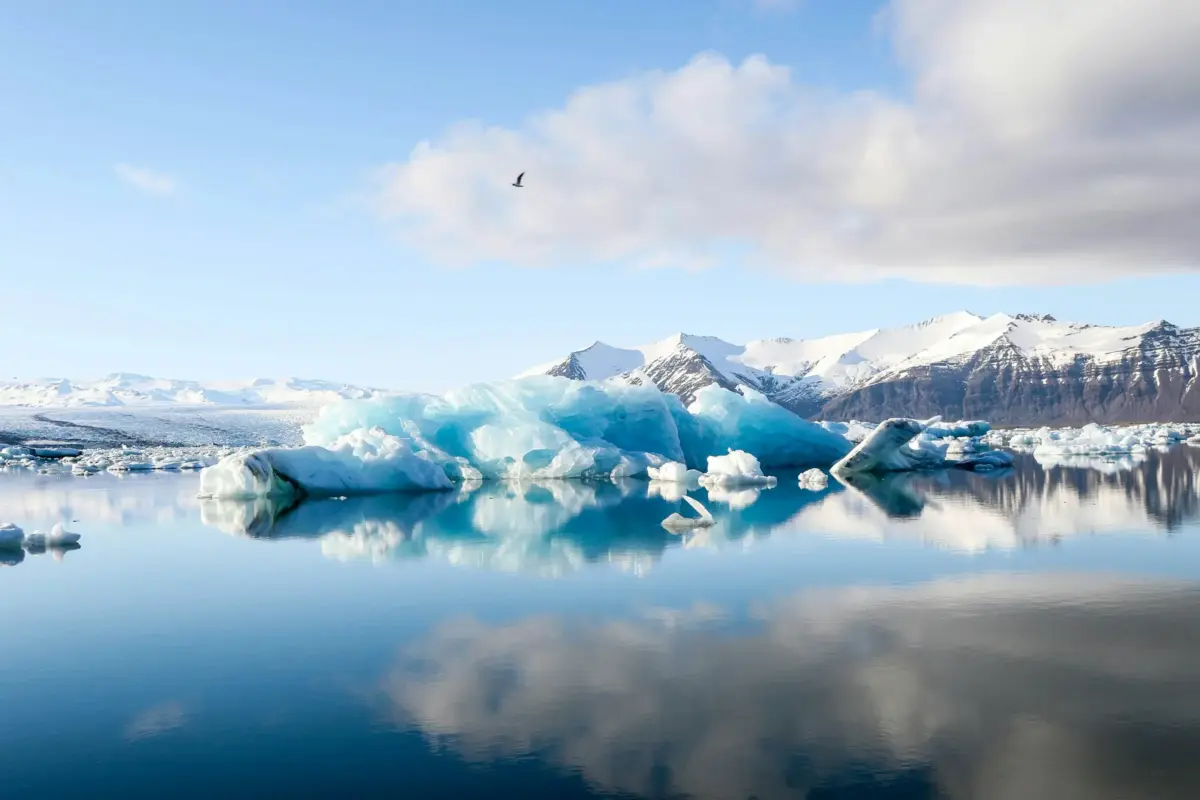
Kaffeklubben Island, or Coffee Club Island, the closest landmass to the North Pole. Source: Wikimedia Commons, Nissen Martin, CC BY-SA 4.0

Where is the world’s northernmost city? The North Pole itself lies in the middle of the Arctic Ocean, making it virtually impossible to build a city there. Occasionally, a Russian drifting station—part of the “North Pole” program—is situated near the pole, staffed by about 50 people; however, this can hardly be called a city. The closest landmass to the North Pole is Kaffeklubben Island, named by Danish scientists after a “coffee club” at the Geological Museum of the University of Copenhagen. The island is tiny—measuring only 700 by 300 meters—so a city could not be built there; at most, one might fit an insulated building to serve as a coffee house for the club. Perhaps one day this will happen, and the world’s northernmost café will appear on the world’s northernmost island.
Kaffeklubben Island is located near the northern tip of Greenland. The distance from the island to the North Pole (707 kilometers) is only slightly less than the distance from Greenland’s northernmost cape to the pole (712 kilometers). A bit farther west of Greenland lies Canada’s Ellesmere Island. Greenland (the world’s largest island) and Ellesmere (the tenth-largest) are vast landmasses that are indeed inhabited.
However, the northernmost settlements—Alert on Ellesmere Island (835 kilometers from the pole) and Nord in Greenland (920 kilometers from the pole)—are military bases with no permanent civilian population. There are also about a dozen other military bases, meteorological stations, and polar research stations operating on Russian Arctic islands, such as those in the Franz Josef Land and Severnaya Zemlya archipelagos. These are located just over 1,000 kilometers from the North Pole. In all these settlements, people live on a rotational basis—working shifts and then leaving—so they cannot truly be called towns or cities.
Actual towns exist only on the Svalbard archipelago, which is the warmest of all polar archipelagos, thanks to the influence of the West Spitsbergen Current—a branch of the Gulf Stream. In winter, Svalbard is roughly 10–20°C warmer than locations at similar latitudes in Franz Josef Land, Severnaya Zemlya, Greenland, or Ellesmere Island. Yet, this “warmth” is quite relative: the average temperature in winter is around -15°C, while in summer it is only +5°C. Building towns in such harsh conditions requires compelling reasons; in the case of Svalbard, that reason was coal.
Coal mines and miners’ camps gradually evolved into towns and settlements on Svalbard, including Longyearbyen, Barentsburg, Pyramiden, Grumant, Ny-Ålesund, and Sveagruva. Over time, however, coal mining on Svalbard ceased to be profitable. Nevertheless, it would be a pity to abandon these towns—which were built with such immense effort in the High Arctic—especially given the importance of maintaining a presence (for both Norway and Russia) in the archipelago. Consequently, alternative paths for the continued existence of these local towns have been found.

Coal mining at the Kings Bay Kull Compagni operation on Svalbard, 1918. Source: Wikimedia Commons, Riksarkivet (National Archives of Norway), Public Domain

Today, the primary economic activity on Svalbard is tourism. As previously mentioned, Svalbard is the warmest and—from the perspective of Western Europe—the most accessible part of the Arctic. Tourism now generates the largest share of revenue for the regional budget and provides the greatest number of jobs in Svalbard. The abandoned settlement of Pyramiden has become a tourist attraction; it is one of the best-preserved Soviet-era towns outside the former USSR, featuring residential buildings, a cultural center, a gymnasium, a canteen, a swimming pool, and the northernmost monument to Lenin in the world.

The Skjæringa neighborhood of Longyearbyen, the northernmost town, where Sysselmesteren—the head of the Norwegian government’s presence in the Arctic—has its offices. Source: Wikimedia Commons, Bjørn Christian Tørrissen, CC BY-SA 4.0

The settlement of Ny-Ålesund has been transformed into an international Arctic research hub. In Longyearbyen, the University Centre in Svalbard (UNIS) serves, in effect, as a focal point for scientific tourism. While UNIS does not have its own permanent student body, it hosts students from numerous European universities who come for short-term study in various Arctic-related disciplines. Each year, 700–800 students from various countries arrive at UNIS, accounting for up to a quarter of Longyearbyen’s total population.
Coal mining in Svalbard continues only in the Russian settlement of Barentsburg, though this operation has long been unprofitable. Once alternative, sustainable economic models are identified for Barentsburg, coal mining there will also be brought to an end.