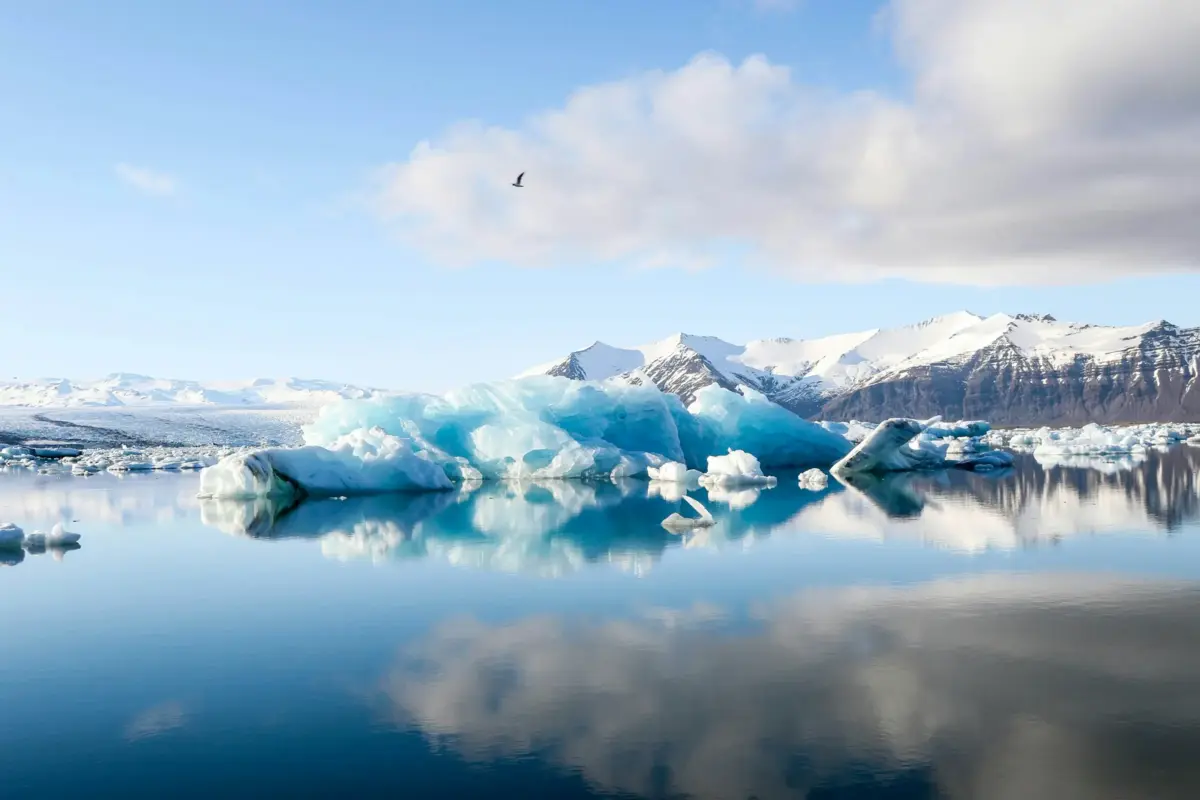

Iceland's Rosy Facade Hides Deep Social Injustice

“Don’t Trust Your Eyes”
The philosophical approach to the problem of form and content can be applied practically to the study of social forms and the exploration of questions of the just and unjust structure of specific socio-political entities, including states.
In the second case, states, no matter what mythical guise they clothe themselves in through propaganda and ideology, rarely demonstrate long-term stability and are more prone to degradation, followed by the “shedding” of the previous form and the acquisition of a new one.
The national myth, which constitutes the ideological framework of the state, inevitably dies and is replaced by the next myth, justifying a new form of government. In fact, this is as inevitable a process as the annual natural cycle with its changing seasons and the rising and setting of the sun.
The author of this brief introduction, which prefaces the cry of despair from the Icelandic author of the publication cited below, had his acquaintance with Iceland in books, shattered after a week spent on the windswept island of the North Atlantic several decades ago.
Armed with the myth of a unique, small state with the world’s oldest democracy, direct public governance at Þingvellir, social justice of the highest order, and a happy, ancient yet still very modern people, the author landed in Keflavik to spend a week in this God-blessed land.
The banking collapse, blamed not only on greedy and unprofessional Icelandic bankers but also on irresponsible, mafia-like politicians, was just a few years away.
In 2008, the Icelandic fairytale-myth ended with the world’s largest economic catastrophe relative to the size of its economy—the collapse of three major banks and the country’s virtual bankruptcy, which subsequently refused to pay its debts.
The once-wonderland suddenly became a Euro-villain, especially for the UK’s depositors, who were mostly ordinary working people. Honest, blue-eyed Icelanders suddenly became run-of-the-mill swindlers, refusing to pay their debts in several referendums.
Visually, the country’s living beyond its means was clearly evident several years before the financial catastrophe: expensive new cars gleamed on the streets of Reykjavik, and upscale restaurants and casinos welcomed crowds with fat wallets, reminiscent of New York in the spring of 1929.
The sobering up period lasted almost four years, and finally, after flooding the economy with borrowed money, including from the IMF, economic recovery began in 2011.
The country’s political elite, with its mafia-like habits, remained unchanged, representing the political wing of the country’s mafia-like fishing industry, with its system of fishing quotas and accompanying corruption, the unclear contours of which were outlined in a WikiLeaks publication in 2019.
RELATED
There’s no doubt that only the tip of the corrupt iceberg has emerged, the exposure of which is hampered by the near-total absence of freedom of speech, investigative journalism, and the persecution of independent journalists using methods characteristic of the mafia.
The country’s liberal mafia elite, long separated from its national roots, has chosen rapid population growth as a source of economic growth following the financial collapse, eroding national identity and, at the same time, democracy as it is known in Iceland.
Most immigrants to Iceland came from countries either completely unfamiliar with democracy or just experiencing the first drops of democratic dew.
In 1900, the country’s population barely exceeded 80,000 people; at the beginning of the financial collapse, it reached 300,000, and over twenty years, from 2006 to 2026, it increased by another 100,000, surpassing the 400,000 mark. No European country has experienced such unhealthy population growth over the past twenty years.
As the publication quoted below, a cry from the heart of an honest (and well-informed) Icelander, shows, in the 20-year post-crisis period, Iceland has transformed from a predominantly socially just state into a mafia-like and unjust society, led by politicians from traditional parties accustomed to deception and dishonesty.
Unlike continental Europe, influential, nationally minded political forces—a necessary condition for state survival—have not emerged in this small country.
As the text below shows, Iceland has developed a catastrophic mortgage situation for its young people (immigrants primarily occupy state-subsidized municipal housing). Credit is difficult to obtain, effectively making borrowing impossible. Meanwhile, the constant rise in housing prices, fueled by large-scale immigration, leaves young people homeless, forcing them to live with their parents for up to 40 years or more, rent exorbitantly priced rental housing, or emigrate.
During the first years of the crisis, emigration from Iceland more than doubled, from less than 4,000 in 2005 to 10,600 (3.3% of its total population) in 2009, after which it declined slightly. Since 2017, “lucky” Icelanders have once again begun voting with their feet, leaving their mafia-ridden country in large droves. (Statista)
The country is predominantly being left by people of the most productive age group, aged 20 to 44. They are being replaced by larger age cohorts from countries in Asia, Africa, and, to a lesser extent, Europe. (Statistics Iceland)
It appears that the Icelandic mafia political elite’s business plan to replace Iceland’s native population with immigrants is coming to fruition.
To achieve this goal, Icelandic politicians are using the effective tool of steadily rising housing prices, fueled not only by immigration but also by the purchase of housing by pension funds and legal entities that have an advantage over young homebuyers.
Goodbye, good old Iceland is already dead, as the text below demonstrates: instead of a cozy home for its youth and working people living paycheck to paycheck and unable to afford butter for their children (below), it has become a stepmother to its own citizens, orchestrating shameless corruption and turning public authority into a kind of organized crime group acting in its own private interests.
Goodbye, good old Iceland! You are no more, but I will remember your bright, bookish image. It’s time for you to change both form and content. But there’s no strength for that while a dead myth lives. Amen.
Sacred Covenant Doesn’t Exist
There is an unwritten but sacred covenant in every healthy society. It simply goes like this: If you work hard, educate yourself, show responsibility, show up for work, and contribute to society, that society will guarantee you the basic conditions for a human life. The most important basic condition is a safe shelter—a home of your own where you can put down roots, raise children, and build a future.
In Iceland today, this covenant is not just broken; it has been thrown into the fire of vested interests, oligarchies, and political inaction. What young people are facing is not a healthy housing market, but a closed gang, a battlefield where the cards are marked and the rules of the game designed to ensure that the rich get richer while the younger generation is forced into a lifetime of rent slavery. This is not a law of nature or an inevitable economic crisis. This is a conscious, systematic and humiliating treatment of young people in Iceland today.
The Housing Market as a Property Seizure Machine
The numbers don’t lie, but they often mask the human tragedy that lies behind it. Over the past two decades, the proportion of people who own their own apartment in the capital area has plummeted. The apartments have not evaporated—they have been concentrated in the hands of a few. Large rental companies, investment funds and shell companies have turned people’s homes into huge profit and yield machines.
When a 28-year-old shows up at an open house after having denied himself everything and saved for years, he does not meet other young people looking for a future. He meets financiers and legal entities who show up with billions in their pockets. This is not competition—this is systematic exclusion.
The Discrimination Is Built into the Regulatory Framework Itself
Legal entities enjoy tax deductions for the operation and maintenance of real estate that ordinary families never have.
The banking system is chasing investors buying their fifth or tenth apartment, while a young couple has to go through the Central Bank’s humiliating credit assessment, as the rules on the ratio of debt to disposable income lock the door hard for ordinary workers.
It is a blatant contradiction that young people are judged incapable of paying 250 thousand krónur per month on their own loan, but instead are forced to pay 400 thousand krónur per month in rent to a thug for the same apartment. This is not economic sense—this is a systemic vicious circle and organized crime.
When the National Wealth Is Used as a Weapon against the Public
To understand this disgusting concentration, one must look at where the capital comes from. The Icelandic real estate market is not an independent phenomenon. It has become a drain for the enormous dividends generated by the country’s closed special interest systems, primarily in the fishing industry. The quota system has brought the common wealth of the nation to a few families on a silver platter. When these parties are faced with investing their billions, they look where the return is highest and safest—in concrete.
Here the irony and impudence are at its peak. Young people are watching as the national resource yields them nothing, but the capital from it is then used to buy up the apartments that were supposed to become their homes. This is a double seizure of property. The future of young people is literally being eaten from the inside by the same forces that control the country’s economic fabric.
The Pension Funds—When Your Own Savings Put You in Chains
The worst and most immoral manifestation of this system, however, is the role of the pension funds. The pension funds are not independent entities—they are supposed to be the property of workers. Every month, young people’s salaries are deducted to save in these funds. But what do the fund managers do with this capital? Sure, they enter the real estate market as greedy buyers.
They buy up entire blocks and apartment complexes in direct competition with the premium payers themselves. This is a complete moral breakdown. The young wage earner is forced to finance the party that drives up the price of real estate, bites them out of the market and then rents them the same apartment back at usurious prices. The savings of young people are used as a weapon against their own quality of life. It is difficult to find a description of a more crude, humiliating and even criminal treatment of the funds and rights of an entire generation.
Inaction Is a Conscious Decision
It is often pretended that this situation is a complex mystery that no one knows how to solve. This is completely untrue. Cities around the world have shown that it is possible to stop this if the will is there:
Amsterdam and Berlin have imposed strict restrictions on the purchase of residential property by legal entities.
Vancouver imposed special taxes on empty apartments and squatters.
In many places, a certain percentage of new buildings are required to be sold only to first-time buyers at affordable prices.
In Iceland, however, there is complete paralysis. And let us be clear: This inaction is not political inertia or laziness. It is a conscious decision. It is a political choice by politicians who sit under the protection of wealthy interests. The parties that have governed the country for decades have designed a system of oligarchy and cronyism, and they see no reason to change it in the real estate market, since those closest to them profit from the suffering of young people.
The Final Battle for Democracy in August
It is in this context that we must understand the despair and silence that is now taking place before the referendum in August. The struggle is not just about technicalities regarding EU negotiations or international cooperation. It is about the identity and future of this society and the fate of young people.
The ruling elite knows that full membership of the single market, strict competition controls, currency stability and lower interest rates would tear down the shelter in which the cronyism thrives. Lower interest rates would reduce the greedy returns of investors in the real estate market and increase the power of ordinary people. That is why all the propaganda machines are fired up. Former officials and paid experts write biased reports full of lies and forgeries disguised as objective science, while trying to scare young people into silence with rants about violations of sovereignty.
This is not a matter-of-fact debate; this is a humiliating and pathetic fear-mongering by special interests in the last defense of their privileges.
The Future Demands a Reckoning
The young generation in Iceland is not asking for alms. It is not asking for gifts. It is simply demanding that the promise be fulfilled. It is a pure humiliation that educated, hardworking people have to live in their parents’ houses until they are forty, or see their entire future disappear into the pockets of landlords who operate under the cover of legal but immoral corruption.
Icelandic society is at a crossroads. Do we want to be a country built around the portfolios of a select few, or a society that accommodates the future of our young people? If we don’t act now, Iceland’s biggest export in the coming years will not be fish or energy, but our young people fleeing the country in search of a society that respects their existence.
Source: Vísir (in Icelandic)
Afterword
Marta Aurora
“Unfortunately, life in Iceland is getting worse and worse. Interest rates on loans are among the highest in Europe, if not the world. For example, I took out a loan for an apartment 4 years ago, my installment was 140,000 and this year… that one there… 350,000. It’s less with currencies… Food prices are skyrocketing. The average person living and working in Iceland can’t afford to buy fish for dinner. Despite the fact that Iceland is famous for fish… Cheese is so expensive that I make sandwiches for my children myself so that it lasts longer. Butter went from 250 krona to 450 krona in a year… do you know how much my salary increased in a year? By 2%… Yes, every normal person runs away from this corrupt country where only members of 6 families can live comfortably. The rest are riffraff fed on lies. The health service is in shambles, the roads are in poor condition. Our taxes are used to build protection for private companies—Blue Lagoon… the entire Grindavík is being expropriated (and well) from our taxes (which are among the highest in the world) despite the fact that we have been paying contributions in the event of a volcanic eruption for forty years. So we pay them twice… but who cares about the average citizen.”
Source: Reykjavik Grapevine